



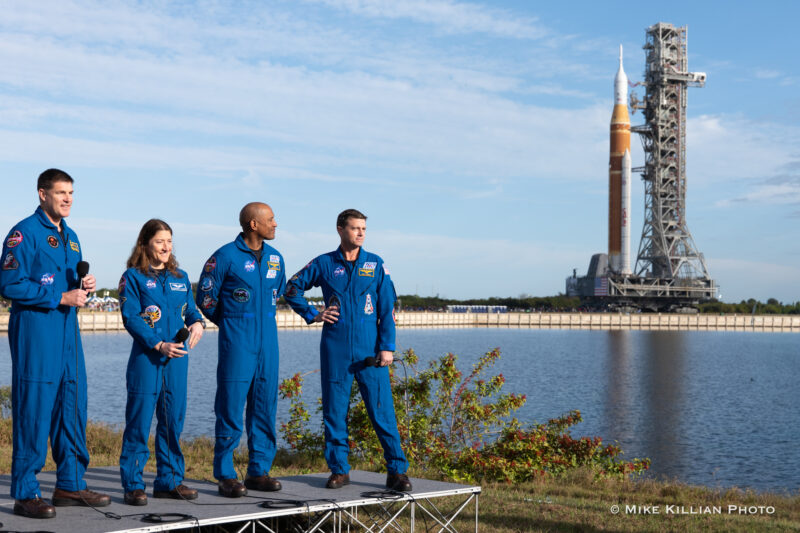
For the first time in over half a century, NASA has a rocket standing on a launch pad to send people back to the moon. After many years and billions of dollars in development and rigorous testing and uncrewed flight tests, the Space Launch System (SLS) and Orion spacecraft are finally almost ready to take 4 astronauts further from Earth than anyone has ever been.
They are NASA’s first Artemis crew, named after Apollo’s twin sister and goddess of the moon. For most people, it will be the first time outside of watching historical videos that they will witness humans visiting the moon. Ultimately, NASA will establish America’s permanent presence there, building a base on the surface and putting a station in orbit called “Gateway”.
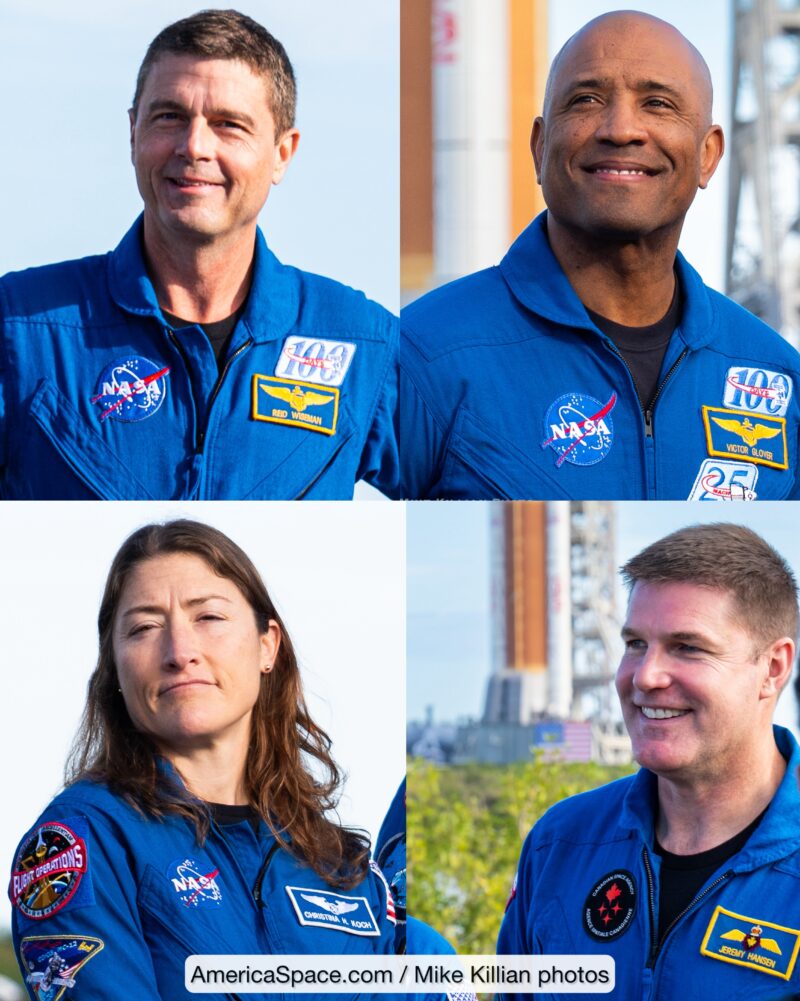
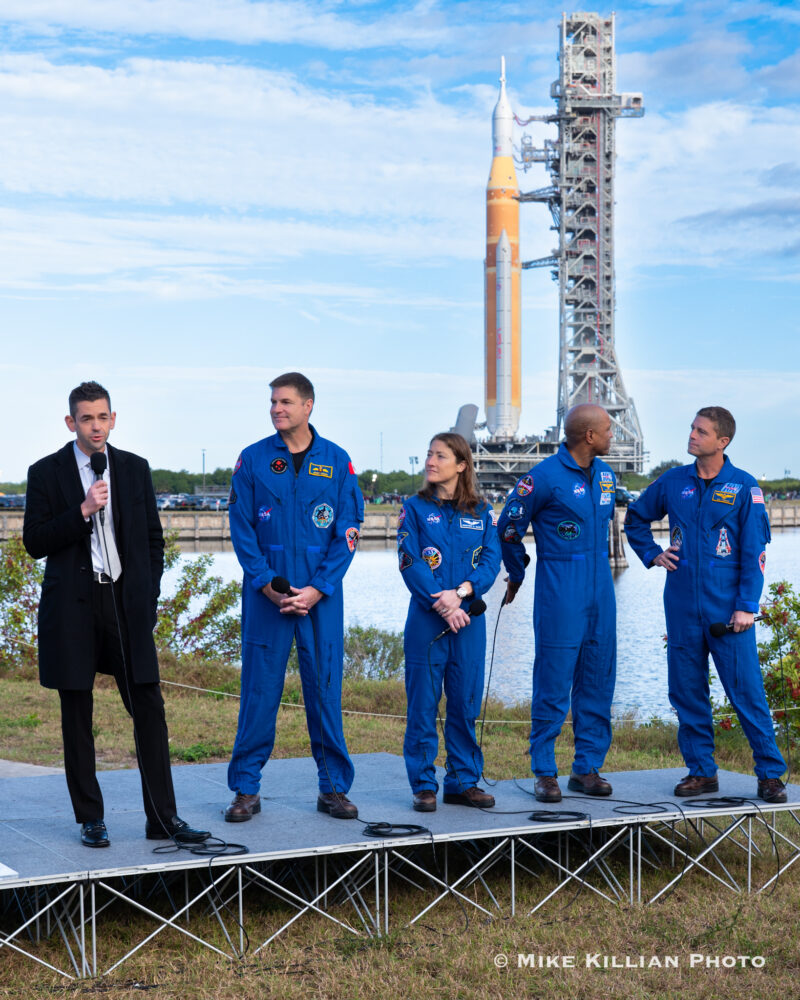
It starts here with Artemis-2. Commander Reid Wiseman will lead the mission, joined by Pilot Victor Glover. Both come from Navy and test pilot backgrounds as fighter pilots, with combat deployments and each has been to space before. We did a 2-part interview with Cdr Wiseman a couple years ago, check that out here.
Joining them are astronauts Christina Koch, the first woman who will fly to the moon, and Jeremy Hansen from the Canadian Space Agency. He will become the first Canadian and first non-American to the moon, on his first mission to space. In 2019, Koch lived and worked in space for 329 days, serving on the ISS for Expeditions 59, 60, and 61.
10-day mission around the moon on a free-return trajectory
Artemis-2 will not land, as it is the first crewed test flight with SLS and Orion. Orion performed great on the Artemis-1 uncrewed test flight in 2022, but NASA won’t be taking unnecessary chances for the first crew.
They will fly a free return trajectory, taking a figure-8 course around the moon and using its natural gravity to slingshot Orion back to Earth.
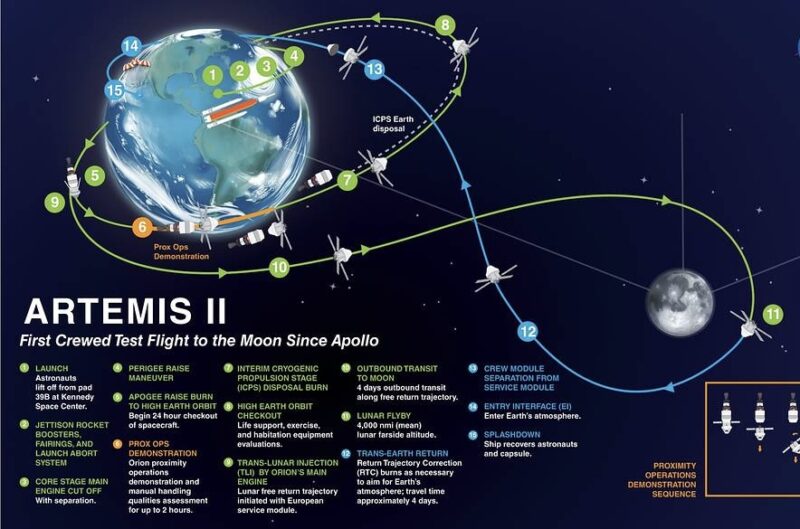
It’s a failsafe that requires no fuel and uses the laws of physics as a backup engine, in case the real engines have problems. The crew would be on a path home no matter what, instead of stranded 230,000 miles away.
It’s similar to Apollo 13’s trajectory, which currently holds the record for furthest humans from Earth. Artemis-2 will break that record, reaching about 4,700 miles past the moon, before falling a quarter-million miles back to Earth.
Rolling out a new era of space exploration
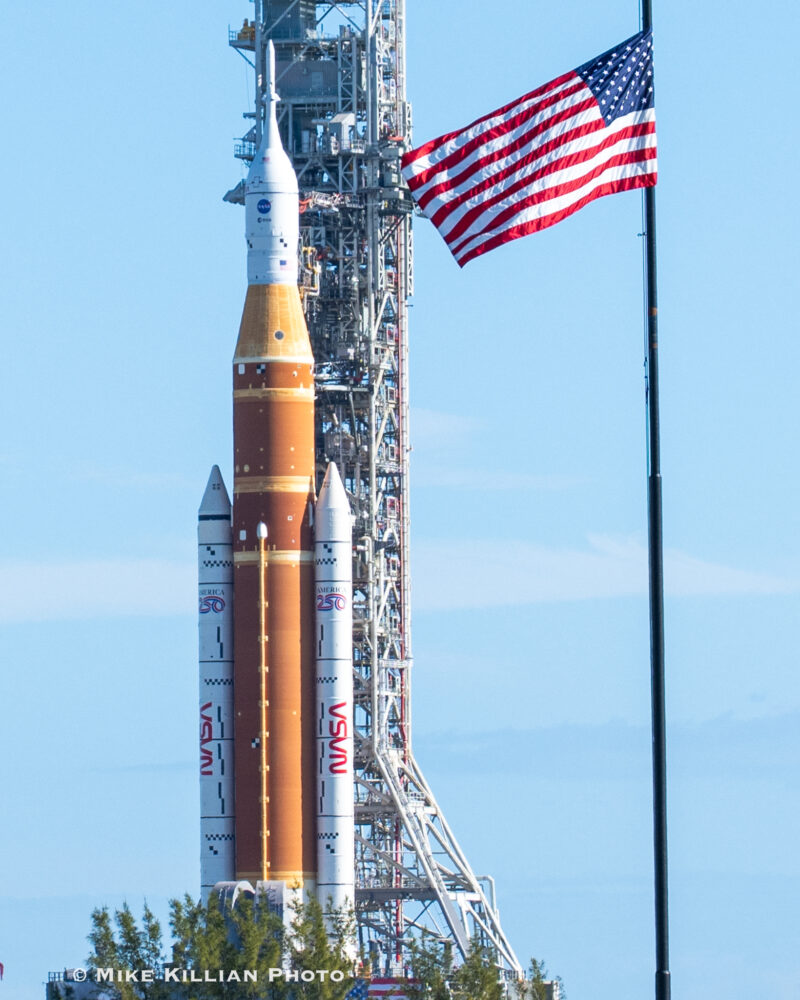
The 322-ft tall Artemis-2 stack rolled out of Kennedy Space Center’s iconic Vehicle Assembly Bldg (VAB) on Jan 17. Inch-by-inch the skyscraper-size vehicle moved out of High Bay 3, originally constructed for Saturn V Apollo moon rockets in the 1960s.
SLS and Orion crawled out attached to a 380-ft tall launch tower, standing on a launch platform and carried by Kennedy’s Crawler Transporter-2 (CT2). Combined, CT2 and the stack weigh over 21 million pounds. The crawler too was originally made to move Apollo, then the space shuttles, and he been upgraded to now carry Artemis.
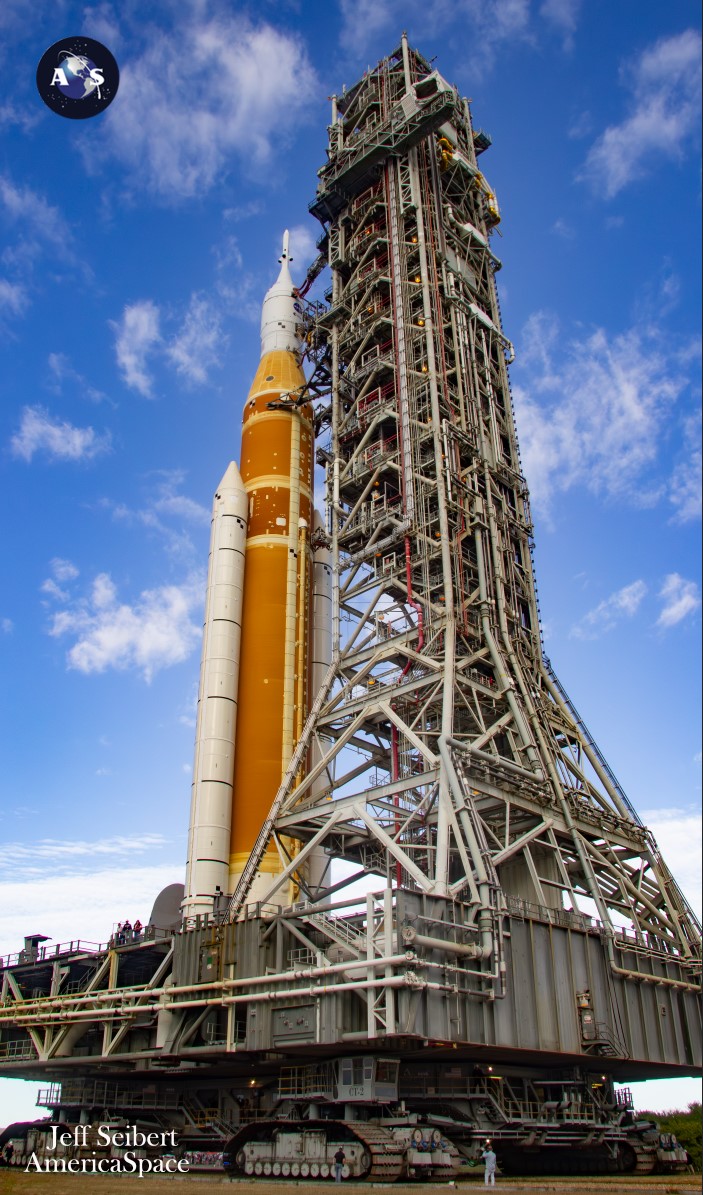
CT-2 is a record-holding engineering marvel itself. It’s the world’s heaviest self-powered vehicle at 6 million pounds. It can haul 18 million pounds, powered by two 2,750-horsepower diesel engines driving electric generators. At full speed it tops out at 1-mph with a moon rocket on its back; 2 mph without. The gas mileage isn’t too bad either, guzzling about 165 gallons of diesel per mile.
NASA’s Ground Systems Development and Operations Program (GSDO) at KSC did a lot of work to upgrade CT-2 from hauling space shuttles to SLS. There aren’t any big changes to how it’s used, they just replaced what was outdated with modern materials and components to ensure the behemoth 113-foot-long and 114-foot-wide machine lasts another 50 years.
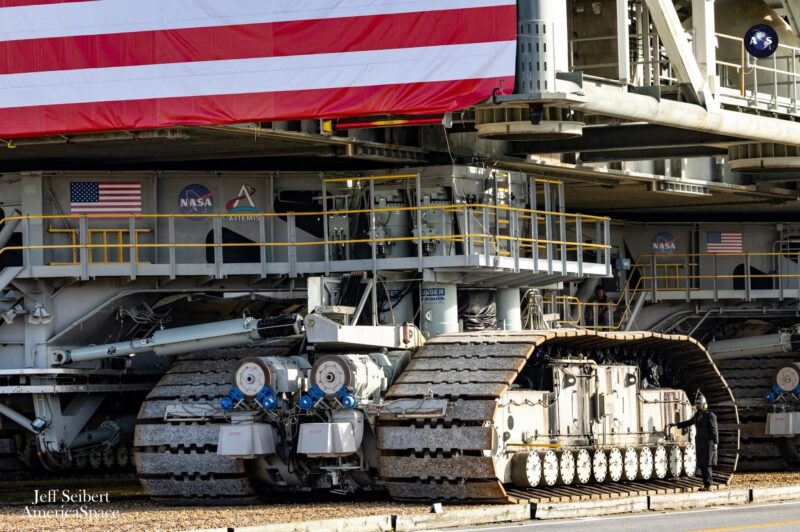
About 25% of the system was updated and upgraded, but not replaced with something completely different. It has 456 tred-belt shoes, each weighing a ton and measuring 7.5 feet long by 1.5 feet wide. GSDO replaced old electronics, cables, tubing, and hydraulic components, cleaned the fuel tanks and hydraulic systems, modified the lubrication delivery system which sprays grease between the shoes as CT-2 crawls, and they installed 352 new thermocouples for the temperature monitoring system. There are 16 sets of gear boxes.
The traction roller bearings were also modified, which give more structural support for the crawler, jacking, equalization, and leveling (JEL) cylinders that allow CT-2 to stay stable when going up the inclined final stretch to the launch pad. They also provide increased power capability.
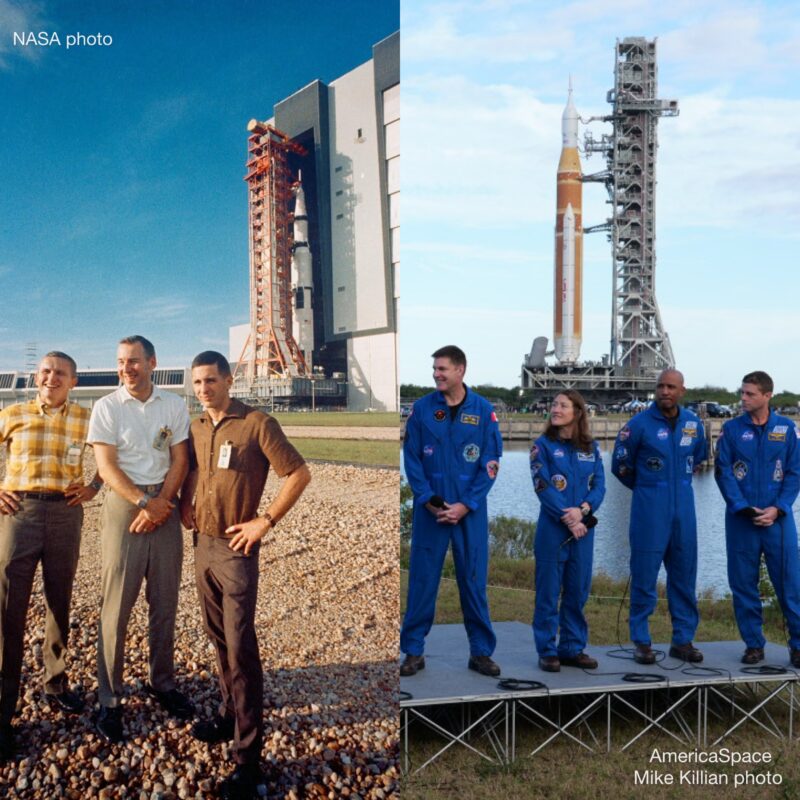
It was absolute nostalgia watching such historic engineering marvels still being used today. The crew access arm at the 274-ft level was extended to Orion as the stack rolled out, due to tight clearance in the High Bay. Teams stopped the move outside of the VAB to retract the arm, then proceeded on the 4.2 mile trip to launch pad 39B with calm winds and clear skies. The move took 12 hours, with no major issues.
The astronauts watched, shook hands, met with workers and children and spoke to journalists as their rocket and spacecraft moved at 0.8 mph to the launch pad. NASA’s new Administrator, Jared Isaacman, attended and spoke as well.
Built on proven heritage and knowledge
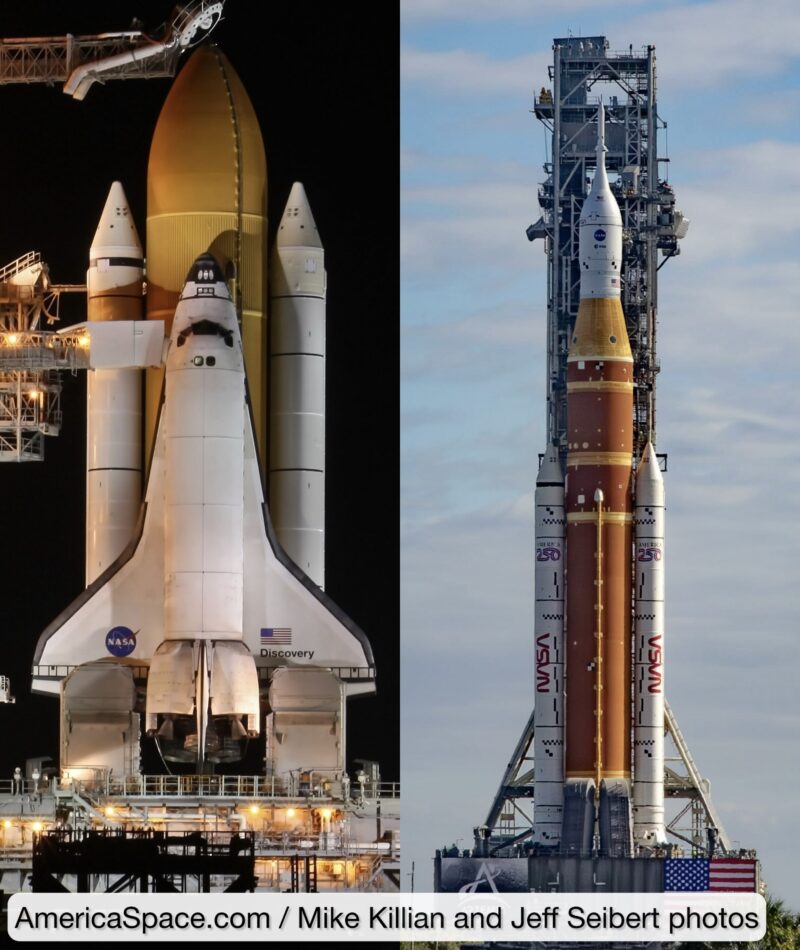
If the rocket looks familiar, that’s because it is. SLS is built on decades of proven heritage and lessons learned from the space shuttle and Apollo. It uses former space shuttle RS-25 main engines, the same solid rocket boosters (SRBs), and the rocket’s core stage is much like the space shuttle external fuel tank – orange from the insulating foam tanning in sunlight.
Everything is of course upgraded for the new requirements and violence of the rocket. More engines, more power, bigger boosters, louder, more thrust etc, so it’s not as simple as just using already proven hardware. NASA spent years upgrading and testing everything that was upgraded, then tested everything integrated. Even this week, NASA tested more RS-25 engines for SLS Artemis-4 at Stennis Space Center. Engines that will launch people to walk on the moon again.
A capsule is still the safest way to fly to space right now. It can abort off a failing rocket and descend on parachutes, and has much less surface area on re-entry for things to go wrong. Private companies also use capsules, it’s just currently the safest and most cost-effective way to fly humans.
Artemis-2 now preparing for Wet Dress Rehearsal
Teams at pad 39B have been busy since the rocket arrived, preparing Artemis-2 for a big Wet Dress Rehearsal (WDR). They have powered-on Orion and the SLS core stage, booster and ICPS, enabled communications with Launch Control, hooked up purge lines, tested the crew access arm, and activated the emergency egress.
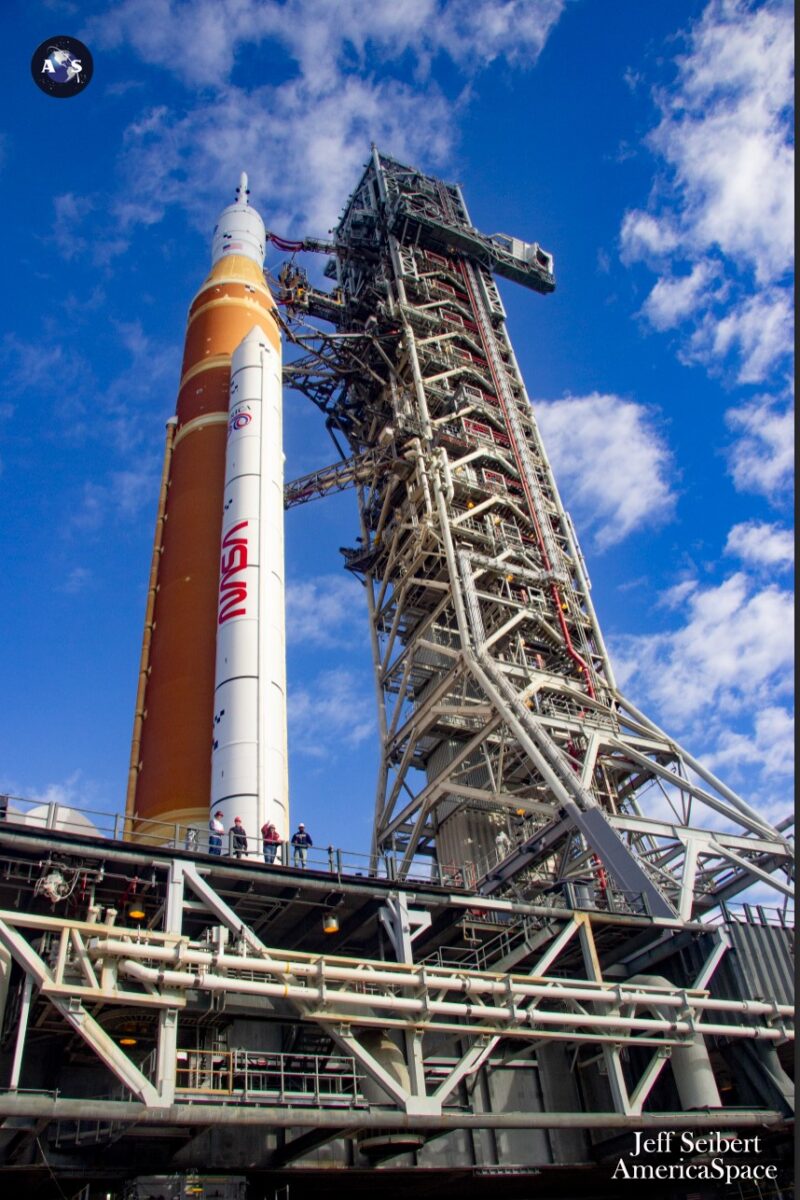
This weekend they will test radio frequency communications between SLS and the Eastern Range, service the SRBs with hydrazine for the Hydraulic System/Motors that control the SRBs RCS, and put some last items onboard Orion (crew tablets, med kits and science payloads).
WDR is scheduled for no later than Feb 2. The launch team will fuel the core stage with 730,000 gallons of cryogenic liquid oxygen and liquid hydrogen, run through the countdown, and practice draining the propellants. It’s a lot of data engineers will need to analyze, and be confident in how the stack responds and address any problems, before NASA will proceed to any launch dates.
Launch windows from Feb 6 – April 30
The first launch window opens Feb 6. Due to orbital mechanics and the mission’s profile, each window is 120 minutes. Below are the launch windows EDT. Most are night, with a few daylight chances in April:
Feb 6 -—— 9:41pm
Feb 7 ——- 10:46pm
Feb 8 ——- 11:20pm
Feb 10 —— 12:06am
Feb 11 ——- 1:05am
Mar 6 ——- 8:29pm
Mar 7 ——- 8:57pm
Mar 8 ——- 10:56pm
Mar 9 ——- 11:52pm
Mar 11 -—— 12:48am
April 1 ——- 6:24pm (daylight)
April 3 -—— 8:00pm (dusk, 18 min after sunset)
April 4 ——- 8:53pm
April 5 ——- 9:40pm
April 6 ——- 10:36pm
April 30 —— 6:06pm (daylight)
SpaceX Starship and Blue Origin still developing lunar landers for Artemis
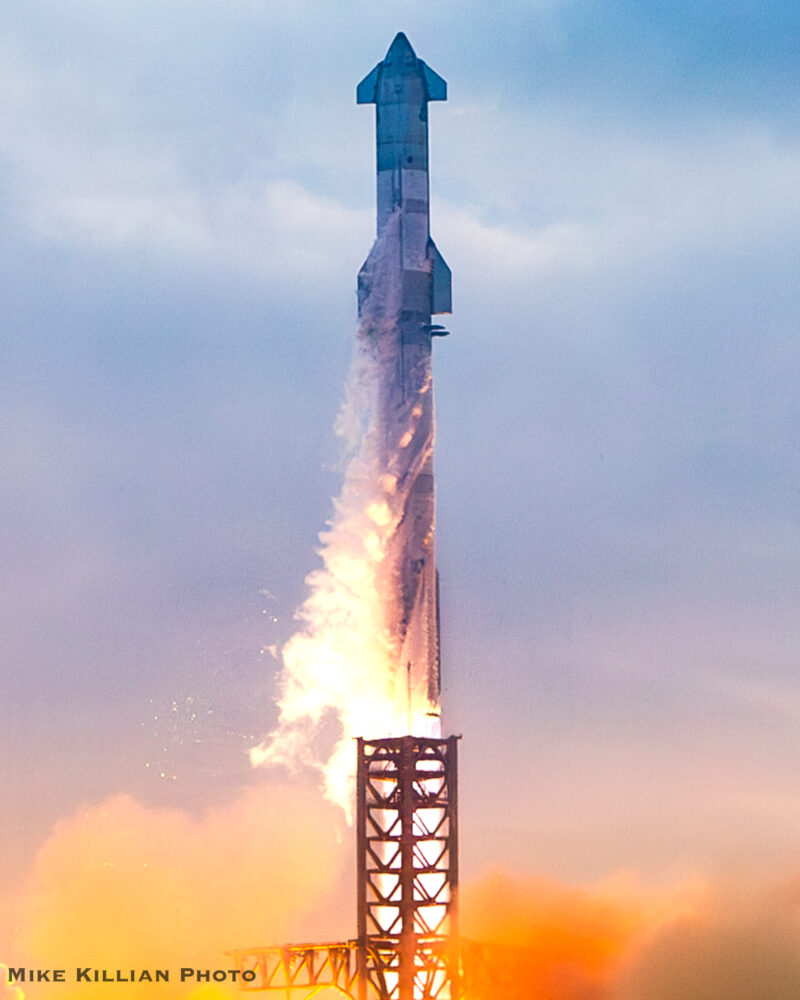
Private companies will be heavily involved with NASA in the Artemis missions, as well as international partners – starting with Jeremy Hansen from Canada on Artemis-2. SpaceX and Blue Origin are both contracted to develop Human Landing Systems.
SpaceX’s Starship is contracted by NASA to dock with Orion on Artemis-3 and be the lander, but Starship is nowhere near ready and cannot be considered any time soon. Blue Origin, however, might be. Their lander, called Blue Moon, is expected to fly to the moon on a test mission this year, and if it goes well, it’s very likely NASA uses them on Artemis-3 instead of waiting for Starship.
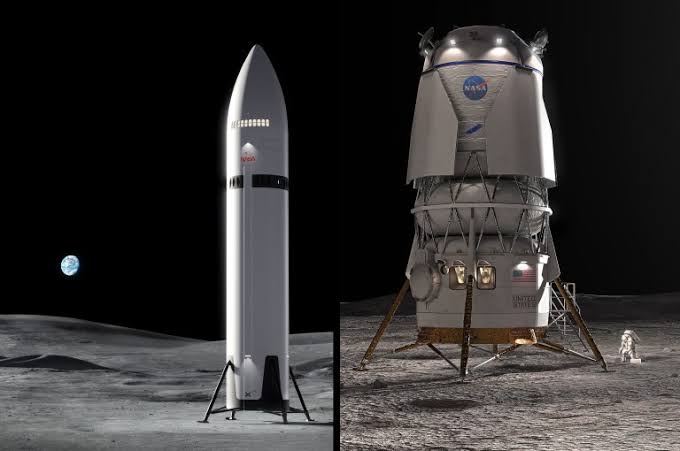
Starship’s idea is also far more complicated. SpaceX wants to launch 2 Starships for each Artemis landing mission: one would be the lander, the other would launch just fuel and dock with the empty lander in Earth orbit to do an in-orbit fuel transfer. The empty refuleler would then land back at its launch site, while the now fully-fueled lander would go to the moon and wait for Orion to arrive.
SpaceX hopes to do an in-orbit demonstration test this year. They have to, otherwise NASA really has no choice but to use Blue Moon. NASA has told both companies; whoever is ready first, wins. Blue Origin’s heavy-lift rocket works and is already launching real missions. Starship is still flight testing and has had numerous setbacks.